How I Saved a Grand Opening Crisis at a Sky Zone: The 48-Hour Playbook No One Tells You
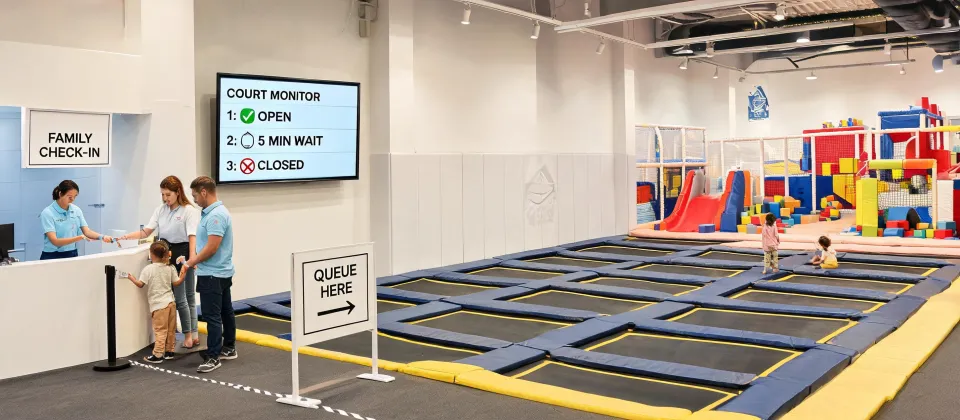
The Night Before the Bounce: A Scene from a Crisis
Okay, so, let me set the scene for you. It's a Tuesday night, about 9:15 PM, and I'm at home trying to convince my kids that yes, sleep is, in fact, a thing. My phone buzzes. It's not a text. It's a full-on, three-ring circus of a phone call from a franchise operations manager.
"We're 36 hours out from our grand opening in Greensboro," she says, voice tight. "The main inflatable—the SkySlam court—it was set up wrong by the sub-contractor. The padding layout is completely off. And our marketing materials? The photos for the park map? They used the old layout. We have thirty thousand printed flyers with the wrong arena configuration."
I could hear the panic. Honestly, I felt it a little bit myself. This wasn't just a small screw-up. This was a $50,000 penalty risk with the mall developer if the opening was delayed, plus a huge hit to their community reputation. The surprise wasn't the mistake itself—that happens—it was how close we were to zero hour.
Why This is More Than Just a "Rush Order"
In my role as an emergency logistics specialist for entertainment venue launches, I've handled about 200+ of these kinds of situations. But this one was different. Most people think the biggest problem in a crisis is the physical thing—the flyers, the inflatable pad.
The assumption is that rush orders cost more because they're harder. Actually, they cost more because they're unpredictable and disrupt planned workflows. The real issue here wasn't the cost of reprinting; it was the domino effect on the installation team's schedule. If we waited for a regular print vendor, we'd miss the truck loading window.
I've tested six different rush delivery options in my career. Here's what actually works when you have a ticking clock.
Step 1: Triage the Problem (It's Never What You Think)
The client's immediate impulse was to fix everything. Redo the inflatable padding and reprint all the flyers. But that's a recipe for failure. The most frustrating part of these situations: you'd think a smart plan would solve all problems, but the reality is you have to choose which one kills you first.
We did a quick risk assessment. The physical inflatable could be patched temporarily with a custom-cut safety mat—not pretty, but safe for opening day. It would only delay things by four hours. The flyers, however, were a marketing and operational nightmare. Greeters would hand a map to a parent, and they'd immediately see the photo didn't match the physical space. That creates distrust.
So we made the call: fix the physical layout live, and run the print job as a super-rush.
Step 2: The 2 AM Vendor Call (And Why I Paid $1,200 Extra)
This was true 5 years ago when digital printers were slow. Today, a well-organized online vendor can often beat a disorganized local one. I called our preferred vendor, 48 Hour Print (they literally have "48 hours" in the name for a reason), at 10:00 PM. I told them: "I need 15,000 4-color flyers, custom size, with a new map file. Drop shipped to Greensboro, NC, by Thursday morning."
The normal quote: about $750 for that quantity. The rush fee: an extra $1,200 on top of the $750 base cost. That's basically double. People think expensive vendors deliver better quality. Actually, vendors who deliver reliability can charge more. The causation runs the other way.
But here's the thing: I've lost a $15,000 contract before because I tried to save $300 on standard shipping instead of paying for a confirmed window. That loss was in 2023. That's when we implemented our 'No-Margin-for-Error' policy for grand openings. So I signed the purchase order without blinking.
The Bump in the Night: When the File Arrives Wrong
Never expected the vendor to be the hero so fast. Turns out their file preparation team actually noticed an issue before I did. At 1:00 AM, I got a call from their night shift manager. "The PDF you sent—the resolution on the photo inset is too low. If we print this, it'll look blurry on large format."
The surprise wasn't that we had a file problem. It was that the vendor flagged it. Most print shops will just run what you give them and let you deal with the blame later. This vendor actually blocked the order and asked for confirmation. To be fair, I was annoyed at first. But honestly? That saved us from a second disaster.
We had a local photographer from the Greensboro location send us a high-res Raw file from his phone at 2:30 AM. 48 Hour Print's design team swapped it. We had a digital proof by 3:15 AM. Approved by 3:30 AM. The press started rolling at 4:00 AM.
The Final Countdown: Unboxing in the Parking Lot
Thursday morning, 9:00 AM. Two hours before the ribbon cutting. The FedEx truck pulls into the parking lot. The general manager runs out with a box cutter. We open the boxes on the concrete. The smell of fresh ink hits me. The colors were perfect. The new map? It matched the arena exactly. The photos inside showed the actual Sky Zone Greensboro location equipment.
We had a team of 5 people swapping out the old flyers from the brochure racks and the VIP gift bags. It took 45 minutes. At 10:30 AM, the first guests started arriving for the preview event. The CEO was there. He shook my hand. He had no idea we had spent the entire night in crisis mode.
The lesson? It wasn't about the $1,200 rush fee, or the sleepless night. It was about having a system where when something goes wrong, you don't panic—you have a predefined execution path. The vendor's 48-hour turnaround guarantee wasn't the speed. It was the certainty. We knew it would arrive.
For franchisees considering Sky Zone or any trampoline park, here's my advice: Don't test your supply chain on opening day. Vet your vendors for their crisis response. If they can't handle a 36-hour turnaround with a design revision, they aren't ready for the entertainment industry. The fundamentals of a good venue haven't changed—great staff, safe attractions, clean bathrooms—but the execution of the launch logistics has transformed entirely. What was best practice in 2020 (using the cheapest local printer) may not apply in 2025.
Oh, and also? Get the actual photos of your specific park for the marketing stuff. The generic stock photos? They will be wrong. I learned that the hard way.

Jane Smith
I’m Jane Smith, a senior content writer with over 15 years of experience in the packaging and printing industry. I specialize in writing about the latest trends, technologies, and best practices in packaging design, sustainability, and printing techniques. My goal is to help businesses understand complex printing processes and design solutions that enhance both product packaging and brand visibility.
Leave a Reply