Sky Zone Trampoline Park Shutdown: What Operators, Landlords, and Investors Should Do First
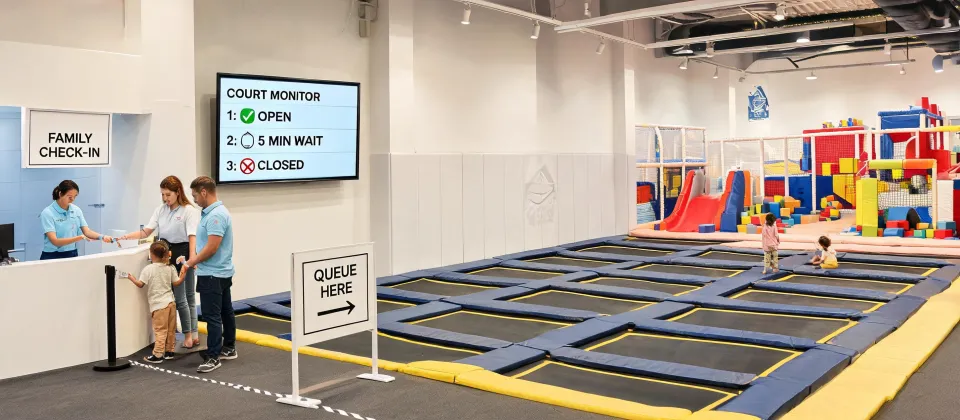
When I get the call about a Sky Zone trampoline park shutdown, my first reaction isn’t “Oh no, another closure.” It’s “Which version of this situation am I dealing with?”
I coordinate urgent response plans for family entertainment centers. In the last three years, I’ve helped with 40+ site assessments after closures, reopenings, and near-misses. Some were temporary, some permanent, and a few could have been avoided if someone had asked a better question sooner. The lesson stays the same: there is no universal answer. A shutdown can be a safety issue, a lease problem, or a strategic signal. Your move depends on which one you’re facing.
The right move depends on which side of the shuttered door you’re standing on.
Before We Start: The Three Shutdown Scenarios
I’ve found it useful to group every shutdown question into three situations:
- Scenario A: You operate the location, and it’s closed right now.
- Scenario B: You own or manage the building where a Sky Zone used to run.
- Scenario C: You’re an investor or franchise candidate using a closure to decide whether the model is still a smart bet.
These scenarios overlap sometimes, but the weight of the work is different. Let me walk through each one as if you had called me before they locked the doors.
Scenario A: You’re the Operator and the Park Is Dark
If the park is shut down, the worst thing you can do is to start talking about reopening before you actually understand why it closed. I’ve seen this happen more than once. It makes the reopening later, not sooner.
The 48-Hour Rule
In the first 48 hours, do not promise a reopening date. Do not put “temporary maintenance closure” on the website. Do not tell staff “we’ll be back in a couple days.” None of that helps. What helps is documentation.
Early on, I made the classic rookie mistake: I wrote a vague online announcement because I wanted to calm guests down. The insurer later read that announcement as proof we knew about a maintenance problem before we had inspected it. That cost us time, money, and credibility. In other words, “temporary maintenance closure” is a legal statement, not a marketing phrase.
Instead, move in this order:
- Secure the building and control access. Nobody enters without a reason.
- Photo-document every area before anyone changes anything. And I mean every area—the trampoline beds, the foam pits, the pad seams, the exit paths, the mechanical room.
- Pull the operational logs from the last 14 days. If you don’t have logs, that’s a separate problem.
- Call your insurer and ask about preservation-of-evidence duties. Usually, you need to preserve the scene, not clean it.
If someone sends you Sky Zone trampoline park Biloxi photos as a reference, don’t zoom in on the graffiti or the empty counter. Look at whether the foam was stripped before an inspector arrived. That tells you whether the closure was managed or chaotic. Same logic applies to your own park: the photos you take before you touch anything are the only ones that count.
Here’s the counterintuitive part: do not clean before the inspector and insurer see the place. I’ve seen operators lose coverage because they power-washed a floor before documenting the spill. The fastest route back to reopening is usually the slower one at the beginning.
Also, be careful with language. We once told a franchisee, “we’re looking into what happened.” They heard, “we’ll probably reopen tomorrow.” That mismatch produced two weeks of rescheduled birthday parties and refund requests. Now I say exactly what I know: “We don’t know the cause yet. We’ll know more by Friday.”
If you need a reference for what a thorough court-level inspection looks like, the ASTM F2970 standard for trampoline courts is a good starting point. It covers design, installation, operation, maintenance, and inspection. If your procedures don’t line up with it, a shutdown may have just revealed a long-term risk, not a random stroke of bad luck.
Scenario B: You’re the Landlord and the Sign Is Already Down
Maybe you own the strip center, or you’re evaluating a former Sky Zone space that’s sitting empty. You’ve probably seen photos, heard the closure story, and you’re wondering whether the building is an asset or a liability. The first question is not “How much rent did I lose?” It’s “What condition is the space being returned in?”
A former trampoline park is not a generic empty box. It has pits in the floor, heavy structural attachments for the trampoline beds, anchors in the concrete, and padded walls that might be hiding water damage. Before you spend a dime on rebranding, get a structural and mechanical assessment. The slab matters. The ceiling height matters. The electrical load matters.
I’ll give you an example of the wrong comparison. Don’t ask “Would The Great Escape Room Chicago work here?” That’s a completely different operating model with a different floor plan, foot traffic pattern, and build-out cost. A 15,000-square-foot trampoline shell is a terrible fit for an escape room, and an escape room’s financial model would look ridiculous in a warehouse with a pit. The real question is not whether the business is fun. It’s whether the space supports their operations.
If you’re taking possession from a franchise operator, ask for their closing inspection photos and maintenance logs for the last 12 months. If they don’t have them, budget for surprise repairs. Do a lien search on the equipment before you let anyone haul away “abandoned” trampolines. And check the fire suppression system separately—it’s always the system that gets ignored.
Here’s a small efficiency tip from someone who has reviewed too many handback reports: use a room-by-room photo template with timestamps. It feels basic, but it has saved me countless hours of back-and-forth. The landlord who has a documented condition report gets the lease release signed faster than the one who waits for the broker to ask.
Scenario C: You’re an Investor Wondering If Sky Zone Is Still a Safe Bet
A Sky Zone trampoline park shutdown in one city can feel like a verdict on the whole concept. It isn’t. Some closures are operator failures. Some are lease failures. Some are health-and-safety incidents that could happen at any trampoline court. You need to know which one you’re looking at before you write off the brand.
When someone asks me whether a franchise is “good,” I usually ask for three numbers instead of opinions:
- The closed location’s gross revenue trajectory, not just the rent that went unpaid.
- The utilization rate—how many guests per open hour, on average, across weekdays and weekends.
- The owner dependency. Who handled daily operations? If the owner was the general manager, that location was a job, not an investment.
I know the comparison question is tempting. But it’s like asking whether a Bose portable speaker is worth it. The answer depends entirely on the room you’re trying to fill. A Bose portable speaker in a small conference room sounds great. In a 200-plus-person ballroom, no portable speaker is going to save you. The speaker isn’t the problem. The context is.
Same thing with entertainment venues. You can’t say “trampoline parks don’t work” any more than you can say “escape rooms don’t work” or “stairmasters are bad for weight loss.” Wait, that last one actually gets to the point nicely: is the stairmaster good for weight loss? It depends on your starting point, your frequency, your diet, and your definition of good. The machine is a tool. The result depends on how it’s used.
So before you use one closure as your final data point, ask whether the location had enough population density, a reasonable lease, and an operator with months of cash reserves. If the answer is no, the shutdown doesn’t prove much about the national system. It proves that one particular deal failed.
How to Know Which Scenario You’re In
If you’re still not sure, use a simple diagnostic:
- Do you control the operation? Start with Scenario A and stop making public statements.
- Do you own the real estate? Start with Scenario B and get a condition report before you plan the next tenant.
- Are you making an investment decision? Start with Scenario C and separate the brand’s model from the one location’s execution.
Then ask yourself: what risk can I actually manage right now? If you’re the operator, you manage documentation. If you’re the landlord, you manage the handback. If you’re the investor, you manage the diligence. Trying to do all three at once is how people make expensive mistakes.
Bottom line: a Sky Zone trampoline park shutdown is a data point, not a verdict. The operators who recover, the landlords who avoid bad leases, and the investors who avoid bad deals all treat it that way. The chaos is just information that hasn’t been organized yet.

Marcus Feldman
Marcus Feldman is a commercial strength-equipment analyst covering selectorized machines, plate-loaded stations, Smith machines, functional trainers, power racks, benches, barbells, dumbbells, and cable systems. He applies ISO 20957-1 and ISO 20957-2 while comparing rated loads, stability, frame deflection, pulley ratios, cable travel, adjustment increments, guarding, entrapment points, fastener retention, and fatigue cycles. His guides help gym operators, coaches, facility planners, and procurement teams evaluate biomechanics, user capacity, floor layout, maintenance access, durability, and lifecycle value.
Leave a Reply