SKY ZONE vs. VR Arcade: Which Indoor Entertainment Franchise Is Right for Your Investment in 2025?
Two Paths to Indoor Entertainment: Why This Comparison Matters
If you're looking at the indoor entertainment space as a venue investor, you've probably narrowed it down to two options: a SKY ZONE franchise (the trampoline park model) or a modern VR arcade that also does escape rooms and competitive gaming. The question isn't which is better—it's which fits your market, your risk tolerance, and your operational strengths.
I've spent the last 4 years evaluating franchise opportunities for a small investment group. We process about 60-80 due diligence requests annually across 8 different entertainment sectors. What I've found is that the conventional wisdom—'brand names always win'—doesn't hold up when you dig into the numbers. Here's how I compare them.
Dimension 1: Initial Investment & Ongoing Costs
SKY ZONE Upfront
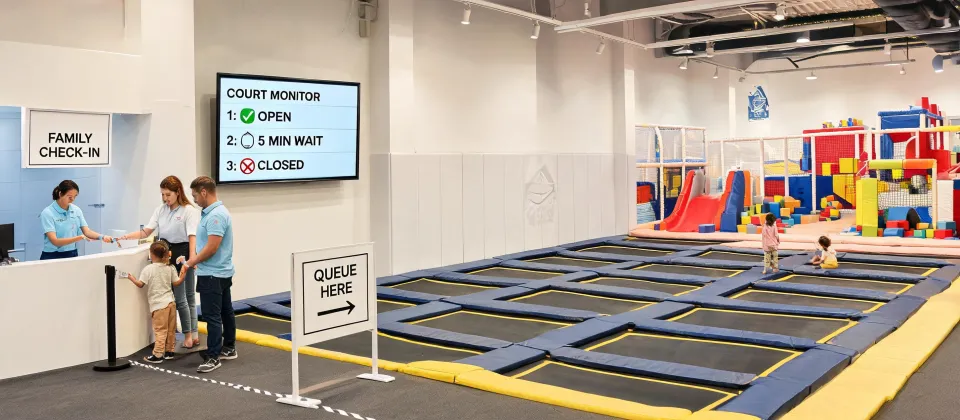
A SKY ZONE trampoline park franchise typically requires a $50,000–$100,000 franchise fee, plus real estate build-out costs that can range from $1.5M to $3M depending on location. You're looking at a 30,000–50,000 sq ft space, with specialized equipment (trampolines, foam pits, and courts) that has a limited supplier base. The ongoing royalty is around 7% of gross sales.
VR Arcade Upfront
A VR arcade or hybrid venue (VR + escape rooms) can be set up for $200,000–$600,000 total. Space requirements are smaller (2,000–5,000 sq ft is common). Equipment costs include headsets, PCs, haptic gear, and room-scale tracking systems. They're easier to relocate and don't require specialized construction. Ongoing royalties vary but are often lower (3–5%) since there's less brand dependency.
The verdict here caught me off guard: I started this analysis expecting the VR route to be the 'risky startup' and SKY ZONE to be the 'safe bet.' In practice, the lower capital requirement of VR means less debt service and faster break-even—provided you can drive foot traffic. I saw a VR venue in a mid-sized mall hit positive cash flow in month 9 (thankfully, their investor didn't panic during months 4–6 when revenue was flat). The SKY ZONE took 18 months to reach the same point, but with much higher monthly revenue once it did.
Dimension 2: Target Market & Customer Lifetime Value
SKY ZONE Demographics
SKY ZONE parks are pitched at families and teens. Birthday parties, school groups, and weekend open-jump sessions drive the bulk of revenue. A SKY ZONE trampoline park franchise in Holland, for example, relies heavily on local birthday party bookings, which have a high per-visit spend ($200–$400 per party) but a low repeat rate—most families come 2–3 times a year at most.
VR Arcade Demographics
A VR arcade with escape rooms (like those in San Jose or Fort Worth) draws a broader age range: corporate team-building (weekday afternoons), college students (evenings), and families (weekend mornings). Escape rooms have a higher repeat rate, especially if you rotate themes quarterly (which is cheap to do in VR, since no physical props need rebuilding). I've seen venues where 40% of revenue comes from repeat customers who come for new escape room experiences or to beat their own scores.
Here's the insight that changed my thinking: I assumed SKY ZONE's birthday party business was recession-proof. It's not. When parents cut discretionary spending, party budgets are the first to shrink. The VR arcade, by contrast, had more pricing flexibility—lower per-visit cost ($20–$40) and a subscription model that smoothed out cash flow. The consistency of subscription revenue for weekly VR gamers and escape room enthusiasts often beats the lumpy party revenue of a trampoline park (surprise, surprise).
Dimension 3: Operational Complexity & Support
Operating a SKY ZONE
Running a SKY ZONE trampoline park requires managing a large hourly staff (15–25 people per shift), enforcing safety protocols, dealing with trampoline maintenance (which is expensive and somewhat specialized), and handling the inevitable liability questions—even with waivers, safety nets, and trained staff. The corporate support is comprehensive: training programs, marketing templates, and a known playbook for pricing and scheduling. But you're dependent on that support; if it falters, you can't easily pivot.
Operating a VR Arcade
A VR arcade is technically simpler to run—fewer staff (3–5 per shift), less physical wear and tear (software doesn't break like trampolines do), and easier quality control (you can monitor a VR session remotely). However, technology support can be a headache: headsets need firmware updates, PCs crash, and some customers get motion sick (which you need to handle gracefully). You might even run a side promotion: "How to win war card game in VR" to attract competitive gamers and build a regular crowd.
The unexpected finding here: I assumed SKY ZONE's operational support would be a clear advantage. The reality is more nuanced. SKY ZONE's support is excellent for a standard model—but if your local market has unique needs (e.g., a school district that wants STEM programming or a corporate park that wants team-building), you'll be inventing solutions yourself anyway. The VR operator I spoke with in Fort Worth said, "The corporate support is minimal, but that's fine because I can change my pricing, themes, and even operating hours within a week. You can't do that with 30,000 sq ft of trampolines."
How to Choose: A Practical Framework
After seeing multiple venues succeed and fail in both categories, here's my rough guide:
- Choose SKY ZONE if: You have a large capital budget, you're in a suburban area with a high density of families, you value a proven playbook over flexibility, and you're comfortable managing a large hourly workforce and the associated liability risk.
- Choose VR arcade if: You have limited capital, you want to test multiple revenue models (escape rooms, VR gaming, e-sports), you're in an urban or mixed-use area, and you value operational flexibility over brand support.
One thing I'd do differently: Before signing any franchise agreement, go visit at least 3 locations in person. For SKY ZONE, check the reviews of the SKY ZONE trampoline park in Holland and the pricing at the Mishawaka location—are the operational details matching what corporate promised? For a VR/escape room business, visit an escape room in San Jose and one in Fort Worth, and talk to the operators about their tech refresh cycle (which, honestly, is the biggest cost they underestimate).
To be fair, some investors do both—a combined model where you have a small trampoline area and a large VR/escape room section. That hybrid approach can outperform either option alone, but it requires even more careful management. I get why people are drawn to it: it hedges against shifts in entertainment trends. But in my experience, hybrids work best when one model clearly dominates (say, 70% VR, 30% trampoline), rather than trying to split equally.
The decision kept me up at night during our due diligence phase—I went back and forth between a SKY ZONE (brand stability, proven cash flow) and a VR arcade (lower risk, higher upside). On paper, the VR play made more sense for our market. But my gut said people would always choose the big name. After 5 years of evaluating venues, I've come to believe that the 'best' franchise is the one that matches your market's actual behavior—not what you hope it will be. Spend the money on market research before you spend it on a franchise fee. It's the cheapest insurance you'll ever buy.

Jane Smith
I’m Jane Smith, a senior content writer with over 15 years of experience in the packaging and printing industry. I specialize in writing about the latest trends, technologies, and best practices in packaging design, sustainability, and printing techniques. My goal is to help businesses understand complex printing processes and design solutions that enhance both product packaging and brand visibility.
Leave a Reply