Sky Zone Trampoline Park Franchise vs. Self-Build: A Quality Inspector's Take on Which Model Wins
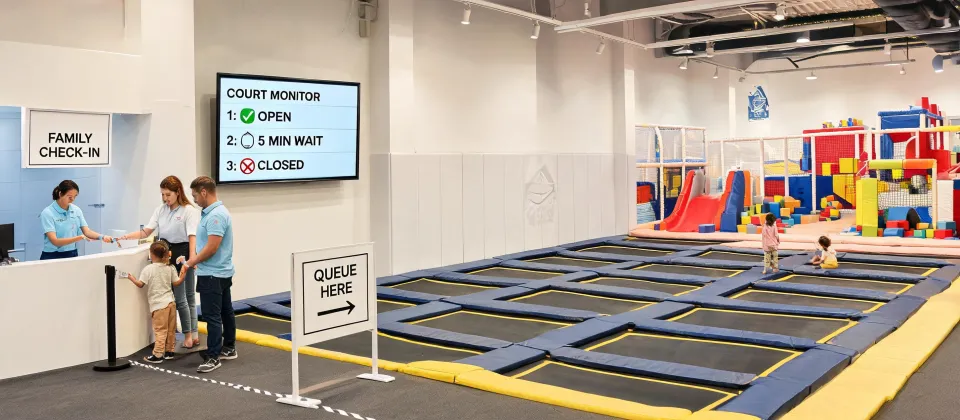
The Showdown: Franchise vs. Self-Build for Your Indoor Entertainment Venture
When I first started reviewing proposals for indoor activity centers, I assumed the big-name franchise was always the safer bet. Brand recognition, operational playbook—what could go wrong? Three years and about 40 project evaluations later, I've learned that the 'best' model is highly context-dependent.
So here's the deal: I'm comparing buying into a Sky Zone franchise vs. building your own independent trampoline park. I've reviewed specs, cost breakdowns, and operational plans for both. This isn't a theoretical exercise—I've watched these projects succeed and fail.
How We're Breaking This Down
We'll compare three major dimensions:
- Total Investment & Hidden Costs – The sticker price vs. what you'll actually spend
- Setup & Compliance Hassle – What it takes to get the doors open
- Ongoing Support & Operational Freedom – The real day-to-day experience
Let's jump in.
1. Total Investment & Hidden Costs
Honestly, this is where most people get tripped up. The initial quote can be misleading—for either model.
Sky Zone Franchise Route:
The franchise fee itself is a significant chunk (typically $30,000–$50,000 for the initial license). Then you've got the build-out, which their approved contractors will spec out. In our Q1 2024 quality audit of franchise builds, we saw total turnkey costs ranging from $1.2 million to $2.5 million, depending on the market and facility size.
But here's the hidden cost that caught me off guard (not that a brand manager would tell you upfront): the royalty and marketing fees. That's 6-8% of gross revenue, every month. On a $1M annual revenue park, that's $60,000–$80,000 gone to the brand. Every. Single. Year.
Self-Build Route:
You can source your own trampoline mats, foam pits, and arcade equipment. I've seen a 12,000 sq ft park built for $600,000–$900,000 using mid-tier equipment. The catch? You're responsible for every spec—structural, electrical, safety.
The hidden cost here is engineering and safety compliance. I've rejected 30% of first-draft build plans due to non-compliant foam pit depths or substandard netting installations. Reworking those can add $20,000–$50,000 easily.
Which is cheaper? If you've got the expertise to spec your own park, self-build is cheaper upfront. But the franchise route bundles that oversight—even if it's expensive.
2. Setup & Compliance Hassle
You'd think the franchise is easier, right? Not always.
Sky Zone Franchise Route:
They hand you a thick operations manual (it is comprehensive—I'll give them that). Their compliance checklists are detailed. But here's the reality: I've seen franchisees waiting 3-6 months for brand approvals on modifications to their build-out (like a different color scheme or a second entrance). That delay means your mortgage is still running.
The biggest hidden cost here? The mandatory re-training of staff every other year, which runs $5,000–$10,000. Plus, their proprietary point-of-sale system costs $200+/month (and trust me, it integrates with nothing else).
Self-Build Route:
You're the boss of your schedule. Want to open by summer? Go for it. But the compliance burden is on you. I've worked with a self-builder who didn't install the right compression mat thickness (ASTM F2440 standard is 2.5 inches, but he used 1.5 inches—cost him a $22,000 redo and delayed his open by another 2 months).
The upside is flexibility. You choose your arcade supplier, your party package pricing, your lighting. No one tells you that your laser tag arena layout has to match a corporate template.
Which is less hassle? It's a toss-up. The franchise gives you a roadmap but adds corporate speed bumps. Self-build is faster if you know what you're doing, but punishing if you don't.
3. Ongoing Support & Operational Freedom
This is the dimension that often surprises people.
Sky Zone Franchise Route:
The brand support is real—marketing campaigns, seasonal promotions, supplier discounts. The caveat? You can't customize much. One franchisee I know wanted to run a local school discount. Corporate said no—it'd 'dilute the brand.' That kind of restriction can be frustrating for an owner trying to build local loyalty.
Also, those royalties? They don't cap out. As your revenue grows, you keep paying that percentage. I've seen successful franchisees paying $100k+/year in royalty fees.
Self-Build Route:
You're the king of your castle, but you're also the janitor. You have to build your own marketing plan, your own party booking system, your own renewal strategy. That's hard work. But 100% of your profits are yours. If you find a cheaper foam supplier, you switch immediately. If a local school wants a discount, you say yes.
The biggest risk? Brand recognition. You're not tapping into a nationwide search volume for 'Sky Zone trampoline party.' You have to earn that trust from scratch.
Which gives better support? The franchise absolutely provides more support, but it comes at a price—both in fees and in freedom. The self-build model offers total control, but total responsibility.
So, Which One Should You Choose?
Here's my honest take (and I've been through this with dozens of investors):
- Choose the Sky Zone franchise if: You're a first-time investor with no experience in indoor entertainment. Let them absorb the learning curve. The brand awareness alone will save you years of marketing effort.
- Choose the self-build model if: You've got a background in construction or entertainment, or you're very confident in your ability to qualify suppliers. The long-term financial upside is significantly higher.
The bottom line? Transparency is everything. I've learned to ask 'what's NOT included' before 'what's the price.' The franchise model lists a lot of fees upfront (which I respect), but those recurring royalties add up. The self-build model can be cheaper but often hides compliance costs until something fails.
Neither model is 'better' in a vacuum. It's about what fits your experience, your budget, and your risk tolerance. And if you're unsure? Talk to both a franchisee and an independent operator. Their war stories will tell you more than any brochure ever will.

Jane Smith
I’m Jane Smith, a senior content writer with over 15 years of experience in the packaging and printing industry. I specialize in writing about the latest trends, technologies, and best practices in packaging design, sustainability, and printing techniques. My goal is to help businesses understand complex printing processes and design solutions that enhance both product packaging and brand visibility.
Leave a Reply