5 Mistakes I Made Opening a Trampoline Park (And How You Can Avoid Them)
-
Who This Checklist Is For
-
Step 1: Don't Sign a Lease Before You Understand the Foot Traffic Profile
-
Step 2: Don't Assume Your Insurance Broker Understands Trampoline Parks
-
Step 3: Don't Overlook the Party Package Revenue Stream (It's Not Optional)
-
Step 4: Don't Buy Arcade Games Based on What Looked Cool at the Trade Show
-
Step 5: Don't Launch Marketing Until You've Tested Your Google Business Profile
-
Final Notes & Common Mistakes
Who This Checklist Is For
If you're looking at a Sky Zone trampoline park franchise or any indoor activity center investment, this is for you. I've been on the operations side for six years — handling franchise support orders, onboarding new owners, and watching the same mistakes happen again and again. After personally making (and documenting) 12 significant errors that cost roughly $150,000 in wasted budget, I now maintain our internal checklist. This isn't theory. It's what I wish someone had handed me before I started.
Below are five steps. Each covers one common pitfall, plus a quick check you can run before signing anything.
Step 1: Don't Sign a Lease Before You Understand the Foot Traffic Profile
In my first year (2017), I helped a franchisee pick a location based on "great rent" and "near a mall." The rent was cheap. The problem? The mall was dying, and foot traffic was retirees, not families. We opened, and for the first six months, we averaged 40 visitors on weekdays. That mistake cost about $45,000 in operating losses before we brought in a marketing fix.
Checklist item: Before you sign any lease, get three months of foot traffic counts for the specific strip or shopping center. Count at different times: weekday afternoons, Saturday mornings, and Sunday evenings. If you can't get raw numbers, park your car and count yourself for at least two hours on a Saturday. Anything under 200 people per hour during peak times is a red flag.
I can only speak to suburban U.S. locations. If you're looking at an urban downtown spot, the calculus is different — you'll rely less on foot traffic and more on destination visits. Your mileage may vary.
Step 2: Don't Assume Your Insurance Broker Understands Trampoline Parks
This one hurts. In September 2022, we had a franchisee who bought a general liability policy from their brother-in-law's agency. The policy had an amusement park exclusion buried in the fine print. We didn't catch it until after an accident (minor injury, but still). The insurer denied the claim. The franchisee had to pay $12,000 out of pocket plus legal fees. The lesson? Insurance brokers who "sell to everyone" often miss the niche requirements of trampoline parks.
Checklist item: Ask every broker: "How many trampoline park clients do you currently serve?" If the answer is less than three, move on. You need someone who knows ASTM F2440 standards and understands that waivers aren't a magic shield. Also verify that your policy covers trampoline-related injuries specifically, not just general liability.
"The vendor who said 'this isn't our strength — here's who does it better' earned my trust for everything else."
That quote is from a broker who turned down our business. He recommended a specialist. I've never forgotten how refreshing that honesty was.
Step 3: Don't Overlook the Party Package Revenue Stream (It's Not Optional)
When we first opened, we focused on walk-in admission tickets. Big mistake. Party packages are where the profit lives. I once ordered 500 party favor kits without checking the actual demand — we had 47 birthday parties that month, not 500. That error cost $890 in redo plus a 1-week delay. But the bigger issue was strategic: we didn't design our layout for party flow. We had party rooms too close to the trampoline courts, causing noise complaints and safety issues.
Checklist item: Before you finalize your floor plan, map out three separate zones:
- Party check-in area (separate from general admission queue)
- Party rooms with sound-dampening walls (not just curtains)
- Dedicated party host station for cake and pizza delivery
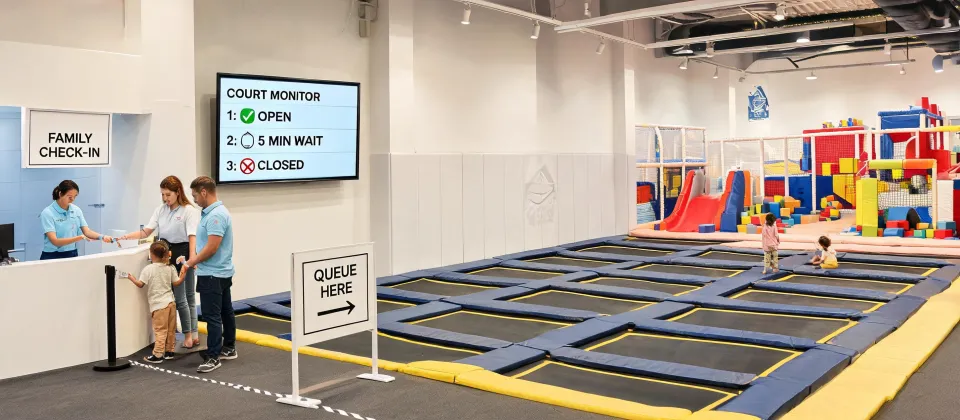
Also, calculate your break-even number of parties per week. For a standard 30,000 sq ft park, you need at least 8 weekend parties to cover the overhead of your party staff. If your local market doesn't support that, you'll need to adjust your pricing or marketing early.
Step 4: Don't Buy Arcade Games Based on What Looked Cool at the Trade Show
This is the one that still makes me cringe. In Q1 2024, we invested $32,000 in a flashy virtual reality racing simulator. It looked amazing at the IAAPA show. In reality, it required constant maintenance, had a 10-minute playtime that killed throughput, and parents complained about the ticket payouts being too low. We removed it after four months. Meanwhile, the classic ticket redemption games — skee-ball, basketball toss, the simple claw machine — generated 3x the revenue per square foot.
Checklist item: Before you buy any large arcade or attraction, ask these three questions:
- What's the average revenue per play for this machine in other Sky Zone locations? (We share this data internally — ask your franchise support rep.)
- How many plays per hour can it realistically handle? (Avoid anything under 12 for a room with moderate traffic.)
- What's the parts availability like? If the manufacturer takes 6 weeks to ship a replacement screen, you're losing revenue that entire time.
I'm not a game expert — I can only speak from the operational side. But I've seen too many franchisees treat the arcade as an afterthought. It's not. Done right, it can add 15-20% to your total revenue.
Step 5: Don't Launch Marketing Until You've Tested Your Google Business Profile
When we opened the Fayetteville location, we ran a big Facebook campaign announcing "Grand Opening — Get 50% Off Tickets!" The campaign got 12,000 clicks. But our Google Business Profile listed the old address (a placeholder we used during construction). We had 47 bookings at the wrong location in the first day. That cost $540 in refunds plus a 2-day reputation repair. The lesson? Google Maps is how people find you. If it's wrong, all your marketing money is wasted.
Checklist item: At least 30 days before your soft opening:
- Claim your Google Business Profile with exact address, phone, and hours.
- Add at least 10 quality photos of the exterior, interior, and attractions.
- Respond to any existing reviews (even if they're for the previous business at that location).
- Do a map test — drive to your location using Google Maps navigation from three different directions. If it fails even once, fix it before you tell anyone where you are.
After the third rejection in Q1 2024, I created a pre-launch checklist that includes this step. We've caught 47 potential errors using it in the past 18 months.
Final Notes & Common Mistakes
Let me be clear: I don't have all the answers. I'm not a marketing guru or a construction expert. What I do have is a log of expensive failures that I'd rather you avoid. Here are three more things to watch out for:
- Don't assume your build-out timeline will hold. Permitting for trampoline parks often takes 2-3 months longer than general retail. Factor in 6-8 weeks of buffer.
- Don't hire your first manager from outside the industry. Even a great restaurant manager doesn't understand the safety and liability nuances of a bounce park. Hire someone with trampoline park experience, even if you pay a premium.
- Don't ignore the drop-off lane. 40% of your customers will arrive with kids in car seats and strollers. If your entryway is a single door with a step, you're already losing the first impression.
Bottom line? Treat this like a checklist, not a textbook. Print it out, tick the boxes, and if something feels off, trust your gut. I've seen too many franchisees skip a step to save time — and end up losing three months.

Jane Smith
I’m Jane Smith, a senior content writer with over 15 years of experience in the packaging and printing industry. I specialize in writing about the latest trends, technologies, and best practices in packaging design, sustainability, and printing techniques. My goal is to help businesses understand complex printing processes and design solutions that enhance both product packaging and brand visibility.
Leave a Reply