Sky Zone Franchise Cost: The 10-Year TCO Question B2B Buyers Forget
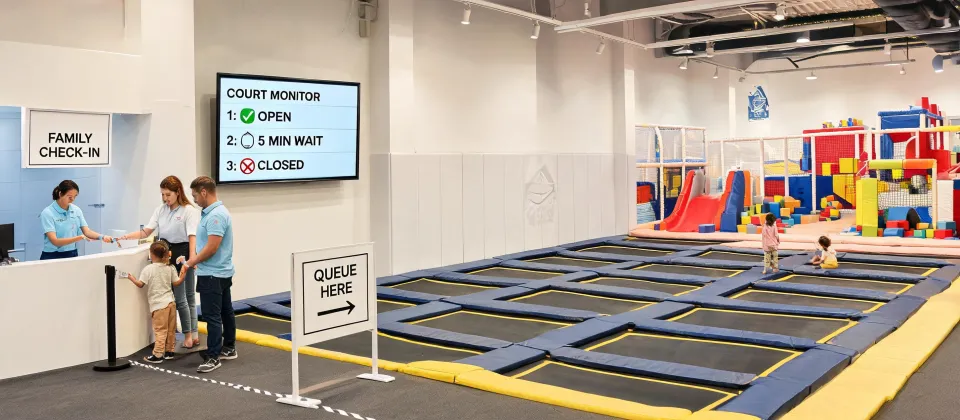
If you're researching a Sky Zone franchise, start with the 10-year total cost per usable square foot, not the initial franchise fee. In six years of managing procurement for a 140-person family entertainment company, I've seen two parks with nearly identical build-out budgets end up more than 30% apart once insurance, mat replacement, and HVAC reserves were included. The franchise fee felt like the biggest number at the beginning. By year three, it was not.
I'm a cost controller, not a franchise salesman. I manage an annual procurement budget of around $3.2M for our company and have negotiated with more than 30 equipment and facility vendors since 2019. No one is paying me to promote Sky Zone. I'm sharing what I've learned because too many B2B buyers skip the sections of the franchise disclosure document that matter and then get burned by the fine print they didn't read.
Here's the short version: the advertised franchise investment is the entry ticket, not the real cost. Recurring royalties, marketing contributions, software fees, insurance requirements, and equipment replacement schedules usually shape the five-year forecast more than the initial fee. If a pitch ends with a polished 'thank you slide' but no itemized assumptions behind it, you're looking at a sales deck, not a financial model.
Why total cost of ownership matters more than sticker price
The most common mistake I see is comparing one franchise fee quote against another as though that covers the project. It does not. When I started tracking every invoice from existing operators, I found that roughly 34% of actual project costs in my ledgers came from categories that were absent from the original summary page. I am not saying that percentage is a national statistic; I am saying the missing costs are real enough to matter.
- Franchise royalty, usually based on gross sales
- Brand and local marketing fund contributions
- Required point-of-sale, booking, and reporting software
- Liability insurance for bouncing, climbing, and open-play activities
- Foam, mat, padding, and safety surface replacement
- Heating, cooling, and ventilation costs for large open spaces
- Training travel, grand-opening support, and initial inventory
- Landlord-required improvements beyond the core build-out
That last item is one of my favorite hidden costs. A building can look perfect in photos and have a reasonable lease, but the landlord may still require upgrades to the sprinkler system or the electrical panel. In one lease review, that added $76,000 to a project that looked attractive before the quote.
Read the FDD like a fee map
Under the FTC Franchise Rule (see ftc.gov/franchises), a prospective franchisee should receive the Franchise Disclosure Document before money changes hands. That document is not a formality. I go straight to the fee items instead of reading the marketing section first. Item 5 tells me the initial franchise fee. Item 6 lists the other continuing fees that repeat month after month. Item 7 gives estimated initial investment ranges. If there is an earnings claim, Item 19 says so and tells me what assumptions stand behind it. If no earnings claim appears, treat any revenue projection in a sales call as unverified.
I once counted a recurring technology fee in the FDD that had not been mentioned in any sales deck. It was less than $900 per month per location, which sounds minor. For a planned ten-location group, that was more than $100,000 in annual recurring cost. It was not hidden if you read Item 6, but it was absent from the discussion. The transparent way to handle that is to put the fee schedule on the table before the first meeting ends.
What Virginia Beach, Stockton photos, and local searches really tell you
I understand why someone researching an entertainment investment searches 'Sky Zone trampoline park Virginia Beach' or 'Sky Zone trampoline park Stockton photos.' Those searches show whether the location looks popular or how the park is laid out. But they are not operating reports.
Stockton photos helped me see that Sky Zone uses a consistent visual style and layout across locations. They did not show the age of the roof, the condition of the parking lot, or the mood of the local commercial building inspector. Virginia Beach search results suggested that the location was busy during weekend party hours, but they did not show payroll, insurance claims history, or the utility bill for an open-ceiling building with tall play structures.
I also pay attention to other entertainment options in the market. Suppose there is a strong escape room Fort Worth location charging premium weekend prices. That tells me the local household entertainment budget has room to grow. It does not tell me the same families will visit a trampoline park every month. Escape rooms and trampoline parks can set each other's price ceilings, so I view them as market signals, not enemies.
The question that separates honest vendors from the rest
The question I ask before 'what does it cost?' is 'what is not included?' A vendor who lists all fees in the first quote, even when the total looks higher, usually costs less by the end. I compared two proposals for a park refresh not long ago. One bid sheet came in lower but charged separately for permits, safety inspections, and final cleanup. The other proposal bundled those items into one line. The higher initial quote ended up cheaper because the lower quote kept generating add-on emails.
This reminds me of research I once fell into about how to slide in baseball. The main lesson is not about being flashy; it is about deciding on your base before you commit. If you hesitate at the last second, you either overshoot or get hurt. In due diligence, the same applies. Decide which line items you will require before you sit down for the emotional final negotiation, not during it.
So when the sales meeting reaches the final 'thank you slide,' I ask for the full cost schedule. That is the only closing slide that matters.
When you do not need the full model
To be fair, not every purchase needs a ten-year model. If you are taking over an existing location with two years left on the lease and the landlord is responsible for major repairs, a shorter review might be enough. If you are building from scratch or signing a fifteen-year lease, spend the time. Skipping the model because the brand is familiar is precisely when the exceptions start to cost money.
One caveat about my examples: this reflects franchise disclosures and vendor contracts I reviewed through early 2025. Fees change, market conditions change, and franchise documents are updated. Verify the current Sky Zone FDD and current insurance/utility rates with professionals who see your specific deal. My point is not to quote my numbers as today's prices. My point is that pricing transparency should be the baseline, not a reward for asking enough questions.

Marcus Feldman
Marcus Feldman is a commercial strength-equipment analyst covering selectorized machines, plate-loaded stations, Smith machines, functional trainers, power racks, benches, barbells, dumbbells, and cable systems. He applies ISO 20957-1 and ISO 20957-2 while comparing rated loads, stability, frame deflection, pulley ratios, cable travel, adjustment increments, guarding, entrapment points, fastener retention, and fatigue cycles. His guides help gym operators, coaches, facility planners, and procurement teams evaluate biomechanics, user capacity, floor layout, maintenance access, durability, and lifecycle value.
Leave a Reply