I Get Called In When Trampoline Parks Almost Miss Opening. The Problem Is Almost Always a Hidden Fee.
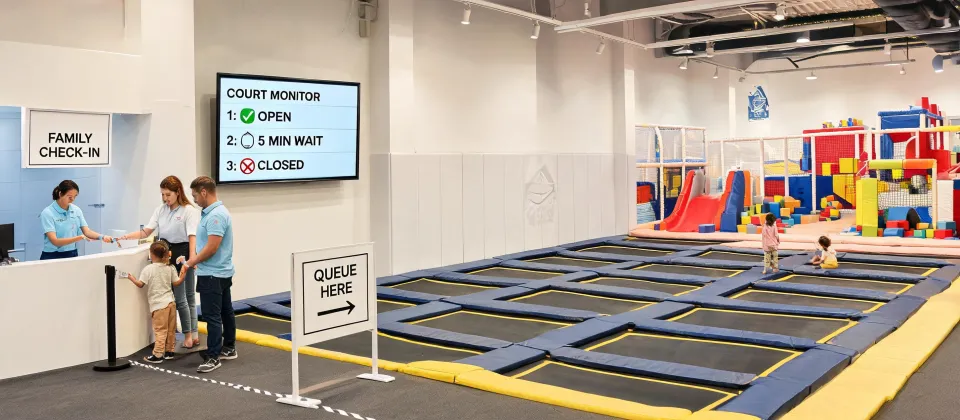
Can I be straight with you? The reason I have a job is a little embarrassing for the industry.
In March 2024, I took a call at 8:47 on a Tuesday night from a venue owner in Hagerstown, Maryland, who had a state safety inspection in 36 hours. He didn't ask me about trampoline seams or foam-pit depth. He asked, 'How fast can you find me twenty thousand dollars?' That's what an unbudgeted vendor invoice had just cost him. The build was fine. The contract was not.
For the past six years, I've coordinated emergency readiness for family entertainment centers that are about to miss their opening dates. Mostly trampoline parks, but we've also rescued arcade additions and an escape room project or two (not my favorite assignments, but they count). Based on our log of 70-plus rush engagements, I have an opinion, and I'll state it the way I'd state it to a client:
If a vendor can't show every fee on the first quote, they're not giving you a lower price. They're giving you a loan that comes due at the worst possible time in your project. That's not a sales theory. It's the single most consistent pattern I see in venues that call me.
A Trampoline Park in Raleigh, NC, Taught Me This the Hard Way
A few months ago, a group of investors building a trampoline park in Raleigh, NC, contacted us eleven days before their planned soft opening. On paper, they had done everything right: permits, insurance, a contractor with references. What they hadn't done was ask their equipment vendor the question I now ask everyone: What's NOT included?
The vendor's quote had come in about 18% below the next bid, so the investors signed quickly. They assumed 'installation' meant the same thing across every bidder. It didn't. Their vendor installed equipment to manufacturer specification, which is not the same as preparing the site for a county insurance audit. By the time anyone noticed, the fix required certified surface testing, repositioning three trampoline beds, and a pile of refunded deposits from a pre-opening event they had to cancel.
I don't remember the exact final number — I want to say they burned around $48,000 on top of the original quote, but I might be mixing it with another project. What I remember clearly is the owner saying, 'We saved $17,000 on that bid.' No. They financed $17,000 at emergency rates.
Here's something vendors won't tell you: when quotes are vague, the vagueness is usually intentional. The low bidder knows the gaps will surface on the buyer's schedule, not theirs. By then, the buyer has no leverage, no time, and no alternatives.
Sky Zone Parks in Sacramento and Hagerstown Show the Transparent Model
Now the positive version.
In the same period, we worked on two parks that didn't produce any midnight panic: a Sky Zone trampoline park in Sacramento and one in Hagerstown. I'm not saying that just because they're brand-affiliated. I'm saying it because their paperwork was boring. Their budgets included line items most independent owners never see: permitting allowances, insurance estimates, pre-opening labor, training days, even a contingency reserve. When a surprise came up — and one always does — it was a line-item conversation, not a frantic phone call.
Their consumer pricing follows the same logic. Families literally search for 'sky zone trampoline park sacramento tickets' or 'sky zone trampoline park hagerstown' and see admission prices, sock requirements, add-ons, and party packages before checkout. No 'we'll tell you the real price later' game. That consistency matters. Hiding prices from a family booking a birthday party gets you one-star reviews. Hiding costs from an owner during a build-out gets you a distressed asset.
What most people don't realize is that a venue's opening date isn't determined by construction speed. It's determined by how many decisions the owner can make without financial surprises. Transparent pricing removes most of the surprises before they become emergencies.
Want the 'Escape Room Near Me' Crowd? Count the Reset Costs First
The same pattern shows up in smaller additions, like an escape room.
Every park owner I talk to wants the 'escape room near me' search traffic on weekday afternoons. It's a smart add-on if the numbers work. But the first escape-room quote they get usually covers the themed walls, the puzzles, and the game master's opening training. It doesn't cover reset labor, replacement props that guests will absolutely break, or the booking software subscription. One owner lost about two months of weekends because his escape-room vendor considered a door lock replacement an 'excluded maintenance item' (unfortunately, it was buried in the fine print).
That's the thing about hidden costs: they're not always huge. They're just constant enough to eat the margin you planned around.
Safety Questions Are a Hidden Line Item Too
The sneakiest hidden cost I see is the price of not knowing exactly what you bought. Here's a real example from one of our arcade projects.
A client added a virtual reality attraction and, to save money, bought a box of no-name bone conduction headphones for the audio. They seemed like a good idea — they don't cover the ears, so guests can still hear staff instructions. But on the second weekend, a parent asked, 'can bone conduction headphones cause hearing loss?' That's a fair question. Those devices rest against the skull, and the parent wanted to know if sound was going straight into their child's head.
The right answer, per the WHO-ITU safe listening standard (H.870, published 2019), is that hearing damage comes from loudness and duration, not the style of headphone. If a device is volume-limited or the venue caps the output, the risk drops dramatically. Most problems I've seen trace back to hours of exposure at unsafe levels, not to the transducer type.
The problem wasn't the technology. The problem was that nobody could prove anything about the specific product. The supplier's documentation was a single sheet with no test data. My team spent about two days finding output specs, writing a staff answer, and adding volume limits to the system. The headphones were cheap. The lack of transparent paperwork was expensive.
And here's something vendors won't tell you: if you have to chase basic product documentation for three weeks, that's not a documentation problem. It's a pricing problem. They've just moved the cost of their vagueness onto your operation.
But Isn't the Transparent Quote Always Higher?
Every time I make this argument, a smart operator pushes back: 'The transparent vendor's quote is higher. Can't I negotiate with anyone?'
Yes, and you can usually negotiate better with a transparent vendor because their line items are visible. You can see where the fat is and where it isn't. An opaque vendor can't offer that clarity without admitting how much padding is in their original number. That's why they deflect.
There's also a difference between paying for someone else's overhead and paying for someone else's vagueness. Overhead is predictable. Vagueness is not. When you're in the family entertainment business, vagueness around safety specs or inspection readiness is the one kind you can't afford.
The worst case is never 'we paid too much.' The worst case is discovering at hour 35 of a 36-hour deadline that the thing you didn't ask about is the thing you need.
The Bottom Line
I know that a world with fully transparent pricing would mean fewer emergency calls for people like me. I'm okay with that. The healthiest parks I've walked into are the ones where the owner could tell me what everything cost without flipping through three folders and apologizing.
So here's my unsolicited advice: on your next vendor call, don't ask what's included. Ask what's NOT included. The vendors who answer clearly — even when it makes their total look higher — are the ones who'll actually save you money.

Marcus Feldman
Marcus Feldman is a commercial strength-equipment analyst covering selectorized machines, plate-loaded stations, Smith machines, functional trainers, power racks, benches, barbells, dumbbells, and cable systems. He applies ISO 20957-1 and ISO 20957-2 while comparing rated loads, stability, frame deflection, pulley ratios, cable travel, adjustment increments, guarding, entrapment points, fastener retention, and fatigue cycles. His guides help gym operators, coaches, facility planners, and procurement teams evaluate biomechanics, user capacity, floor layout, maintenance access, durability, and lifecycle value.
Leave a Reply