How to Choose the Right Corporate Event Venue in 2025: A Practical FAQ for HR & Admin Teams
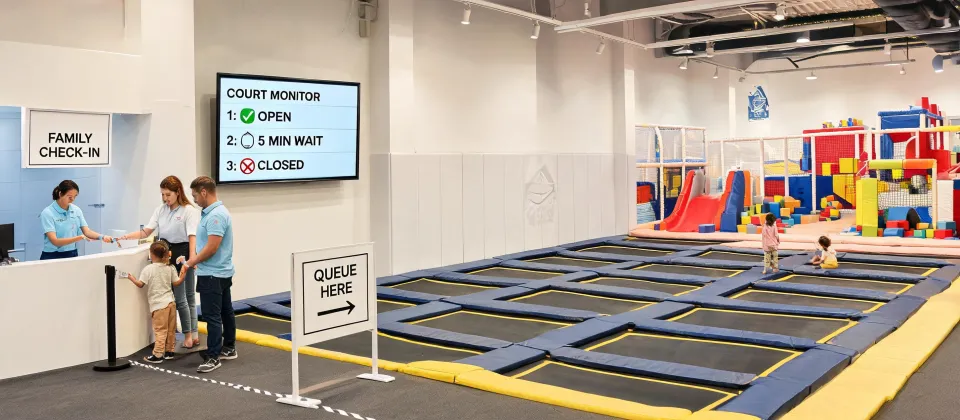
Planning Your Next Company Event? Here's What You Actually Need to Ask.
If you've ever been tasked with finding a venue for a team-building event or company party, you know the drill: start Googling, get a bunch of quotes, and try to figure out which one is the 'real' price. I've been doing this for about five years now—managing events for a mid-sized company of around 200 people. After booking everything from outdoor retreats to indoor trampoline parks like Sky Zone, I've learned a few things the hard way.
This FAQ is designed to cut through the noise. Here are the questions I wish I'd had answered from day one.
Q1: How much should I budget for a 50-person team-building event at an indoor venue?
This is the first question everyone asks, and the honest answer is: it depends on what 'team building' actually means to your group. For a standard 2-3 hour session at a place like a trampoline park, you're usually looking at a per-person rate. In my experience, budgeting about $35 to $65 per person is a safe ballpark for 2025. That usually covers the activity time, basic instruction, and maybe some light refreshments.
But—and this is a big 'but'—that's often just the base price. What I mean is, that number rarely includes everything. Ask specifically: 'What is not included in this per-person price?' Are there fees for dedicated event staff? What about a private room for pizza or snacks? (Should mention: food and drink are almost always an add-on.)
Q2: 'All-inclusive' sounds great, but is it actually cheaper?
In my opinion, an all-inclusive package is usually a no-brainer for a first-time planner. It takes the guesswork out. The vendor lists a flat fee for a certain number of people, and it covers activities, food, and sometimes even a basic AV setup. It's not always the cheapest option, though. I've learned to ask myself two things:
- Am I paying for things I don't need? (e.g., a premium buffet when a pizza break would be fine)
- How much is my time worth? The 'more expensive' all-inclusive package often saves me 6-8 hours of coordination work.
Personally, for a standard company event, I'd argue that the certainty of an all-inclusive price is worth a small premium over a piecemeal package that could have hidden costs.
Q3: What are the most common 'hidden costs' I should look for?
Oh, I have a list. After 5 years of managing these relationships, here are the top three red flags I look for in a quote:
- Setup/Breakdown Fees: Some venues will charge you extra for using their space before or after your official event time. A 2-hour event might require 30 minutes of setup. Ask if that's included.
- Mandatory Gratuity & Service Charges: This is a big one. A venue might quote you $50/head for food, but there's often a mandatory 18-20% service charge and gratuity added on top. That's $10/head extra you didn't see at first.
- Tech & Equipment Rentals: Need a projector for your CEO's 5-minute intro? Need a specific microphone? Don't assume it's included. I once had a vendor who quoted a great rate for the room, but charged $250 for a basic HDMI cable and a screen. That's a deal-breaker for me.
Q4: What's the 'deal-breaker' question I should ask every venue?
Here's a question that took me a few years to learn: "What is your policy on last-minute headcount changes?"
Every event planner knows that ten people can't make it on the day of, but three bring a guest. A rigid venue that charges you for the original number, no matter what, can blow your budget. A flexible venue that lets you adjust the final bill within a reasonable range is a game-changer.
Trust me on this one. I saw a colleague's budget implode because a venue had a 'no changes within 7 days' policy, and she had to pay for food for 30 people who didn't show up. That's a $600 mistake.
Q5: How far in advance should I book an indoor venue like Sky Zone?
For a standard corporate event (not a holiday party), I've found a sweet spot is about 4-6 weeks out. This gives you enough time to get multiple quotes and compare, but you're not scrambling. If you're planning for a peak season like November or December for holiday parties, book more like 8-12 weeks in advance.
If you have less time than that, don't panic. Many good venues keep slots open for last-minute bookings. (Oh, and availability matters—if a venue has only one slot left, that might force you to make a decision under time pressure.)
Q6: Is an indoor trampoline park like Sky Zone suitable for a multi-generational event like a Family Day?
Absolutely. That's one of the big reasons I book them. They offer a controlled, safe environment that's fun for a 6-year-old, a 35-year-old, and a 60-year-old (who just wants to watch and have a coffee). The key is to ask about zones and activities.
For a Family Day, a place like Sky Zone works well because it's self-contained. Kids can jump in a designated area, parents can sit in a viewing area, and you can have a separate room for food. I used a venue like this for a 'Bring Your Child to Work Day' event last year, and it was a huge hit. The 360-degree viewing area was critical—parents could watch without having to run across an entire venue.
Q7: I'm choosing between two similar venues. One is cheaper but further away. Which is better?
This is the classic time vs. money trade-off. I've been back and forth on this for years. On paper, the cheaper venue is a 30-minute drive further for everyone. That's an extra hour of travel time for 50 people. Is that 'saved' $500 worth 50 lost production hours?
In my experience, proximity and convenience win out more often than not. The closer venue, even if it's a bit more expensive, means people are more likely to show up on time and leave happy. It's not just about the hourly cost of your employees; it's about the overall experience. A venue that is a 'walk from the office' or a '5-minute Uber ride' is a serious value-add that doesn't show up on a spreadsheet.
I'd argue that for a morale-building event, the cost of people being annoyed by a long commute is higher than the line-item cost savings.

Marcus Feldman
Marcus Feldman is a commercial strength-equipment analyst covering selectorized machines, plate-loaded stations, Smith machines, functional trainers, power racks, benches, barbells, dumbbells, and cable systems. He applies ISO 20957-1 and ISO 20957-2 while comparing rated loads, stability, frame deflection, pulley ratios, cable travel, adjustment increments, guarding, entrapment points, fastener retention, and fatigue cycles. His guides help gym operators, coaches, facility planners, and procurement teams evaluate biomechanics, user capacity, floor layout, maintenance access, durability, and lifecycle value.
Leave a Reply