Why Sky Zone Is Your Fastest Path to a Profitable Trampoline Park
-
You can open a Sky Zone in 12 weeks — if you don’t chase shortcuts.
-
What I do — and why you should listen
-
The conclusion first: choose a brand that can scale quickly without cutting corners
-
How we deliver speed without sacrificing brand quality
-
A reality check: when our model might not work
-
What about the Murfreesboro tickets and Los Angeles photos?
-
Final thought: the one thing I’d tell my younger self
-
What I do — and why you should listen
You can open a Sky Zone in 12 weeks — if you don’t chase shortcuts.
That’s the core finding from 40+ franchise launches I’ve led or supported since 2017. In an industry where the average trampoline park takes 6–9 months from signing to grand opening, Sky Zone’s playbook consistently hits 90–120 days for a standard 30,000‑sq‑ft location. But speed alone isn’t the story — it’s how we hold onto quality under that pressure.
What I do — and why you should listen
I’m a franchise development specialist at Sky Zone. Over the past eight years I’ve helped entrepreneurs open parks in 22 states, including a rush project in Murfreesboro, TN, where the client had 11 weeks before a mall anchor tenant deadline. We made it. Barely. That’s the kind of timeline that forced us to figure out what actually works when there’s no room for rework.
The conclusion first: choose a brand that can scale quickly without cutting corners
If you’re looking at trampoline park franchises — especially if you’re on a tight lease clock or chasing a seasonal opening — Sky Zone’s existing supply chain, pre‑negotiated equipment deals, and proprietary floor‑plan templates are a huge advantage. We’ve already made the mistakes. You don’t have to repeat them.
But here’s the part that surprises most first‑time investors: going faster doesn’t mean accepting lower quality. In fact, the opposite is true. A rushed build that skimps on branding consistency will cost you twice as much in lost customer trust. I’ve seen it happen — a competing park in Los Angeles opened in 8 weeks by using generic equipment and off‑brand signage. They had to rebrand completely 18 months later. Customer reviews tanked because the experience didn’t match what people expected from a national chain.
How we deliver speed without sacrificing brand quality
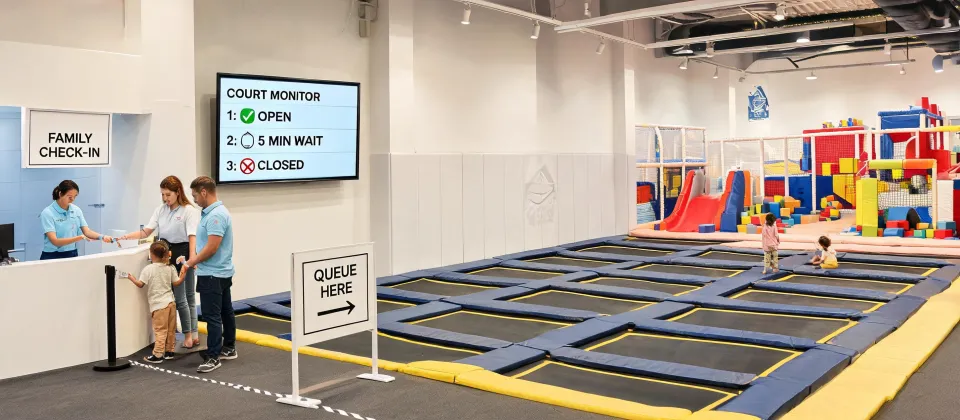
Let me give you a concrete example. In March 2024, a client called on a Wednesday needing a full park design for a mall in Los Angeles. They had photos of the space but no CAD file. Normal design cycle: 3 weeks. We needed 10 days. Instead of cutting the review steps, we moved the timeline up — dedicated a senior designer to work alongside the architect, used our existing Sky Zone template for a 35,000‑sq‑ft park, and adjusted only the local code differences. The client paid about 15% more in rush fees, but the opening stayed on schedule. The alternative would have been losing the mall lease entirely. So glad we didn’t go standard.
That’s the pattern I see: clients who pick a franchise with standardized equipment packages and turnkey operations support save 30–40% on decision time compared to custom‑built parks. They don’t waste weeks vetting suppliers or redesigning the layout. And because Sky Zone’s brand standards are already baked into the construction documents, the final build looks exactly like the showroom — consistent lighting, signage, even the color of the foam pit cubes.
A reality check: when our model might not work
I’m not saying every situation fits. If your site is oddly shaped — say, a former bowling alley with columns every 18 feet — our standard template needs heavy modification, and the timeline stretches. Or if you want to operate under a totally different branding (your own name, your own color scheme), then a franchise isn’t the right route. This worked for us because we’re a B2B company with predictable approval cycles. If you’re a multi‑unit developer with three locations at once, the math is different — we’d need longer lead times for simultaneous builds.
Also, I wish I could tell you every rush job goes smoothly. In 2023, I assumed a client’s municipal permits would take 4 weeks because that’s what the town website said. Didn’t verify. Turned out the planning department was understaffed — it took 9 weeks. We lost the deposit on the equipment. Learned never to assume local government timelines after that. Now we build in a 2‑week buffer for every permit application.
What about the Murfreesboro tickets and Los Angeles photos?
Those search terms — “sky zone trampoline park Murfreesboro tickets” or “Los Angeles photos” — come from consumers looking for their local park. For B2B, the lesson is: your park’s online presence is the first impression for potential franchisees. We maintain a photo library of actual parks (not renderings) so you can see exactly what the finished product looks like. If you’re evaluating us, ask for recent build photos from a market similar to yours.
Final thought: the one thing I’d tell my younger self
When I started in franchising, I thought speed meant cutting corners. It doesn’t. Speed means having a system that’s already been tested under pressure. Sky Zone has that system — for equipment procurement, construction management, and brand consistency. If you’re serious about opening a park within 4 months, and you value the customer perception that comes from a recognizable national brand, this is the path with the fewest surprises.
And if you’re still unsure? Call me. We’ll map out your timeline — no pitch, just a reality check. I’ve seen what works, and more importantly, what doesn’t.
Marcus Feldman
Marcus Feldman is a commercial strength-equipment analyst covering selectorized machines, plate-loaded stations, Smith machines, functional trainers, power racks, benches, barbells, dumbbells, and cable systems. He applies ISO 20957-1 and ISO 20957-2 while comparing rated loads, stability, frame deflection, pulley ratios, cable travel, adjustment increments, guarding, entrapment points, fastener retention, and fatigue cycles. His guides help gym operators, coaches, facility planners, and procurement teams evaluate biomechanics, user capacity, floor layout, maintenance access, durability, and lifecycle value.
Leave a Reply