How to Plan a Group Event at a Trampoline Park Without Losing Your Mind (or Your Budget)
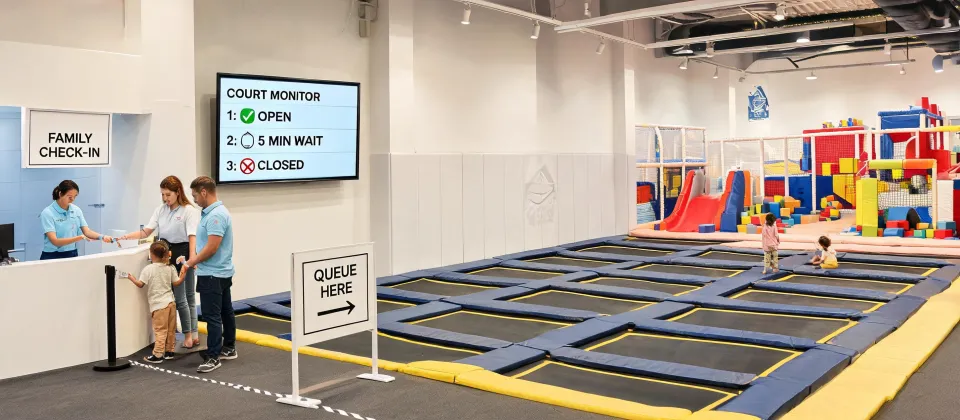
When the VP of HR told me we were doing a company team-building event at a trampoline park, my first thought was, 'Great, another thing to coordinate.' My second thought, after looking at the group rates for the local Sky Zone, was, 'This could actually work.' If you're the person in your office tasked with organizing something for 15, 30, or even 50 people—a team offsite, a birthday party for a colleague's kid, or a client appreciation day—here's a straightforward checklist to get through it without a headache. This is based on managing about 60-80 vendor orders annually for my company, and yes, I've learned a few things the hard way.
Step 1: Define Your Group Profile (The 'Why' and 'Who')
Before you even look at pricing, get this locked down. The venue's answer will change dramatically based on what you need. Be specific with them upfront.
- Group Size: 15 people? 50? The pricing structure often shifts at certain thresholds.
- Age Range: Are these adults, teenagers, or a mix including young children? The activities you'll want are different.
- Event Type: Is this a high-energy competition, a casual social hour, or a structured team-building exercise with specific goals?
- Duration: Are you booking for one hour of jump time, or a two-hour block with a party room afterward?
Why this matters: In my experience, the groups that have the smoothest experience are the ones who showed up with a clear answer to 'What are you hoping to achieve?' A vague 'just want to have fun' is fine, but a specific 'we want to do some dodgeball and then have pizza in a reserved room' gets you a much better, more focused quote.
Step 2: Get the 'Total Package' Quote, Not Just the Jump Time
This is where the value-over-price mindset kicks in. The advertised 'per person' rate for general admission is almost never the final number for a group event. When you call the park—or fill out their online form—ask for the event package, not just a jump ticket.
Key questions to ask for a complete quote:
- Is the group rate inclusive of socks? Most places require Sky Zone-specific grip socks. The cost per pair adds up if it's not included.
- Is there a private or semi-private party room? For anything more than a quick jump session, you'll need a place to gather, do waivers, and eat cake or pizza.
- What is the food and drink policy? Can we bring our own cake? Are there catering packages? What's the per-person cost for pizza and drinks?
- Are there any mandatory add-ons? Some venues require a certain number of 'chaperones' or 'supervisors' for a group event, and they might need to pay an entry fee themselves.
To be fair, the base price of $25-35 per person for a one-hour jump might look amazing. But if you add $4 for socks, $15 for a slice of pizza and a drink, and a $100 room fee, that $35 person is now a $55 person. That's a 57% increase. The way I see it, the cheapest quote up front is often the one with the most hidden costs later.
Step 3: Master the Digital Waiver Process
I cannot stress this enough. This is the single biggest bottleneck for any group event. Most trampoline parks, including Sky Zone, use an e-waiver system. All participants (or their parents, if minors) must sign a waiver online before they can jump.
- Clarify the process with the venue: Do they send you a group link? Do you create a private 'event roster' online?
- Send the waiver link 48-72 hours in advance. In our 2024 company offsite, I sent it a week early. Still had three people filling it out in the car on the way. A lesson learned: people procrastinate.
- Set a 'Waiver Deadline' 24 hours before the event. You will have stragglers, but it's better than having the whole group wait at the front desk.
- Be prepared to help people on-site. Bring a tablet or have a phone handy for the inevitable 'My phone is at 1%' person.
Pro-tip: I said 'as soon as possible' when I sent the link. They heard 'whenever convenient.' Discovered this when I checked the roster 12 hours before the event and only 40% had signed. Now I use specific dates and times.
Step 4: The 'Dress for Success' Briefing
This is the step that most people overlook. You assume adults know how to dress for a trampoline park. They do not. You will always have someone in jeans and a blazer, or someone wearing jewelry that could get caught.
Send a short, clear email to your group 2 days before the event:
- Footwear: Bring clean, dry athletic shoes. No heels, no sandals. Or just rely on the grip socks provided.
- Clothing: Shorts or sweatpants. No belts with large buckles. No dresses or skirts.
- Pockets: Empty them of phones, keys, and wallets. The park will have lockers, usually for a small fee.
- No gum, food, or drinks on the court. This should be obvious, but it's not.
Why do rush fees exist? Because unpredictable demand is expensive to accommodate. The same goes for a group outing: unexpected requests (like 'Can we have our client in a suit jump with us?') create friction. A clear pre-briefing eliminates 90% of the friction.
Step 5: Plan the 'Post-Jump' Logistics
The jump session is the main event, but the party room or the post-jump hangout is where the real bonding happens (and where you eat the pizza). This is also where things can fall apart if you haven't planned the transition.
- Confirm the party room timing. How long after your jump time does the room become available? Is there a buffer?
- Know the food service timeline. If you ordered pizza, does it arrive at the start of your jump session or when you get to the room? You don't want cold pizza.
- Have a 'gathering plan.' Where does the group meet once jump time ends? If you have 30 people, they'll mill around. Designate a specific table or spot in the lobby.
- Payment and tip. Settle the final bill with the event coordinator during the party time, not while you're trying to herd everyone out the door. A 15-20% gratuity for the event host is standard and appreciated.
Looking back, I should have paid for the upgraded pizza package. At the time, the standard cheese-only option seemed fine. Discovered this when half my group is vegetarian and only one type of pizza was available. A valuable lesson in asking about dietary restrictions *before* you confirm the order.
Common Mistakes and How to Avoid Them
Here are the things I've seen trip up even the most organized planners:
- Assuming the 'Group Sales' person works weekends. Your event is on Saturday. You have a question on Friday afternoon. The event coordinator is gone. The on-duty manager might not know your specific contract. Email your questions 3 days out.
- Overlooking the 'Minimum Headcount' clause. Some group rates require a minimum of 10 or 15 paying jumpers. If your group of 12 shrinks to 8, you might be paying for the original 12 anyway. Ask about the policy.
- Forgetting about the music. The park will have its own playlist. If you have specific music needs for an event (like a corporate presentation), discuss it with the venue. Don't just show up with a Bluetooth speaker expecting to take over the sound system.
- The Vendor who couldn't provide a proper invoice: In 2023, a smaller local venue gave me a handwritten receipt for the deposit. Our finance team rejected the expense. I had to pay it out of my own pocket and wait three months for a re-issuance. Always ask for a proper, electronic invoice that includes your company's tax ID and a clear breakdown of charges. Most big venues like Sky Zone are great at this, but never assume.
Prices as of January 2025; verify current group rates with your local Sky Zone or trampoline park. The key is to plan for the entire experience, not just the jump.

Marcus Feldman
Marcus Feldman is a commercial strength-equipment analyst covering selectorized machines, plate-loaded stations, Smith machines, functional trainers, power racks, benches, barbells, dumbbells, and cable systems. He applies ISO 20957-1 and ISO 20957-2 while comparing rated loads, stability, frame deflection, pulley ratios, cable travel, adjustment increments, guarding, entrapment points, fastener retention, and fatigue cycles. His guides help gym operators, coaches, facility planners, and procurement teams evaluate biomechanics, user capacity, floor layout, maintenance access, durability, and lifecycle value.
Leave a Reply