Why Sky Zone Isn’t for Every Operator (and Why That’s Okay)
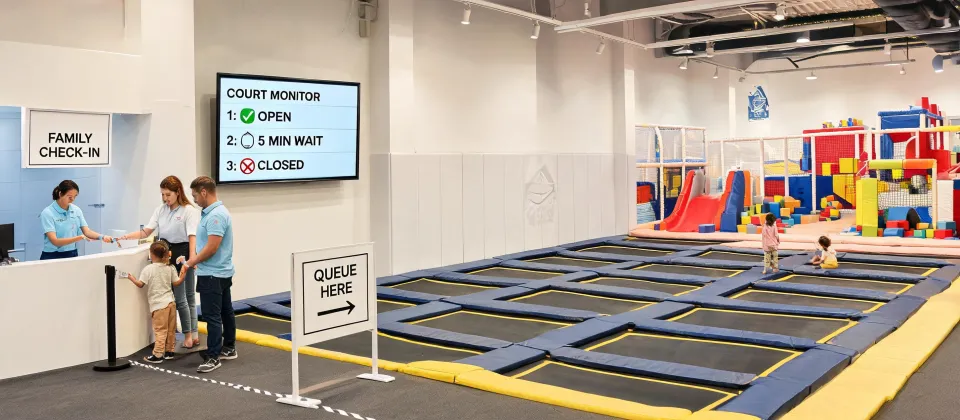
Sky Zone works—if your model fits. If not, the mismatch will bleed you dry.
I manage procurement for a mid-sized indoor entertainment group—think trampoline parks, arcades, the occasional laser tag expansion. Over the past six years, I’ve tracked every invoice, every rush-fee mistake, and every “good deal” that turned into a cost overrun. We’re currently evaluating our next franchise addition, and Sky Zone came up. Again.
Let me be direct: Sky Zone is a strong brand—nationwide recognition, established SOPs, solid family demographic. But I’ve watched three operators in my network sign on and two of them quietly regret it within 18 months. The third? Thriving. The difference wasn’t the brand. It was fit. Here’s how I see the numbers, the operations, and the one thing nobody talks about at the discovery day.
1. The TCO trap: What the franchise fee doesn’t tell you
When I first started vetting franchise opportunities, I assumed the biggest cost was the initial franchise fee and build-out. I was wrong. The real cost—the one that eats margins—is the ongoing operational complexity.
Sky Zone’s model works best when you have high throughput and low staff turnover. That sounds obvious, but here’s the hidden reality: the staff-to-supervisor ratio is tighter than many operators budget for. If you’re in a market where labor is expensive or seasonal, your cost per jumper can spike by 15–20% before you even account for insurance. (Should mention: insurance premiums for trampoline parks have risen 8–12% year-over-year since 2022, per industry loss-run data.)
In Q2 2024, I compared cost projections across three franchise options—Sky Zone, a smaller regional chain, and a mixed-use indoor rec model. Sky Zone’s average cost per customer was 8% lower in high-traffic months but 22% higher in slow months. That’s a risk to your annual P&L if you can’t even out the dips with parties, events, or off-peak pricing. The “cheap” option? Actually ate into profits when we accounted for a $4,200 annual contract on mandatory equipment upgrades—something the franchise agreement buries in fine print.
I get why people go with the biggest name in the room. Brand recognition is real. But if your local market can’t sustain year-round traffic, the math gets ugly fast.
2. The “party” dependency: A blessing and a silent margin-killer
Sky Zone’s bread and butter is parties—birthday parties, group events, corporate team-building. From the outside, that looks like a gold mine. The reality is that party revenue is lumpy, labor-heavy, and highly dependent on local marketing execution.
I once audited a Sky Zone location in a mid-sized metro area. Their party revenue was 43% of total revenue—impressive on paper. But when I ran the cost breakdown, the party segment had a margin of only 12% after staffing, cleaning, and liability coverage. Compare that to open-jump revenue, which cleared 34% margin. The parties were bringing in volume, not profit.
“The best part of a high-party model is the repeat bookings,” a regional manager told me. “The worst part is every party needs a dedicated host, a clean zone, and a 15-minute reset. That doesn’t scale without supervision.” (I should add: we found that locations with a strong “open jump” weekday crowd had better overall margins than those that leaned hard on weekends.)
Sky Zone’s system provides the playbook, but it doesn’t provide the local labor market. If your area has a tight workforce, you’ll be paying overtime or hiring part-time staff who don’t stay long. I’ve seen re-training costs eat up 6% of projected profit in a single quarter.
3. The unsaid truth: It’s not the cost—it’s the complexity
People assume the biggest challenge is the upfront franchise fee. They’re wrong. What I’ve seen across 8 vendor evaluations over 3 months is that the operational complexity—staffing, scheduling, maintenance, insurance, and the constant need to refresh attractions—is the real margin-killer.
To be fair, Sky Zone does a better job than most at providing centralized support. Their training program is solid, and their marketing materials are professional. But that support only goes so far. If you’re not prepared to manage a rotating schedule of 15–20 part-time staff, deal with unpredictable weather impacting foot traffic, and invest in equipment upkeep (trampoline mats wear out faster than you think), you’ll find the “guaranteed” ROI slipping.
One operator I know ignored the warning about rush fees for emergency parts. A torn trampoline mat in July meant a $1,200 rush order plus shipping. That “unexpected” cost? It happened 3 times in 2 years. Totals added up to nearly a 4% drag on annual profit.
“The model works if you run it like a business,” the thriving operator told me. “Not like a passion project.” That’s the honest truth.
4. Answering the natural objection: “But the brand is worth it”
I hear this one all the time: “Sky Zone’s brand recognition alone drives traffic. It’s worth the premium.” I get why people think that. Brand trust is real. But here’s the counterpoint I’ve seen play out in real spreadsheets:
Brand brings people in the door once. The experience keeps them coming back. If your location is clean, your staff are friendly, and your equipment is maintained, the brand name on the sign matters less than the local reputation. I’ve seen a no-name trampoline park outperform a branded one simply because the owner was on-site every day, checking safety and cleaning restrooms.
I’m not saying brand is irrelevant. I’m saying the incremental value of a national brand over a well-run local alternative is smaller than many franchisees assume. And for that premium, you’re also paying for constraints—limited menu flexibility, mandatory equipment refresh cycles, and revenue sharing on certain add-ons.
If your market is saturated with family entertainment options, brand might tip the scale. If you’re in a smaller town or underserved area, a well-executed independent model might actually deliver better margins.
5. The TL;DR: Know your numbers, know your market
Sky Zone is a legitimate player in the indoor active recreation space. I’m not here to bash them. But after tracking $180,000 in cumulative spending across six years of franchise and vendor comparisons, I’ve learned one hard lesson: the best brand for your neighbor isn’t necessarily the best brand for you.
If your market has strong year-round demand, a stable labor pool, and you’re willing to obsess over operational details, Sky Zone could be a great fit. If you’re planning on being an absentee owner, or you’re in a seasonal market with thin margins, you might want to look at a lower-overhead model—or partner with a group that can absorb the off-peak risk.
Granted, this advice goes against the typical franchise cheerleading you’ll hear at a discovery day. But I’d rather tell you the hard truth now than watch you eat a $1,200 reprint cost (or the franchise equivalent) later.
Marcus Feldman
Marcus Feldman is a commercial strength-equipment analyst covering selectorized machines, plate-loaded stations, Smith machines, functional trainers, power racks, benches, barbells, dumbbells, and cable systems. He applies ISO 20957-1 and ISO 20957-2 while comparing rated loads, stability, frame deflection, pulley ratios, cable travel, adjustment increments, guarding, entrapment points, fastener retention, and fatigue cycles. His guides help gym operators, coaches, facility planners, and procurement teams evaluate biomechanics, user capacity, floor layout, maintenance access, durability, and lifecycle value.
Leave a Reply