I Blew $50,000 on My First Sky Zone Buildout (And Why I'm Glad I Did)
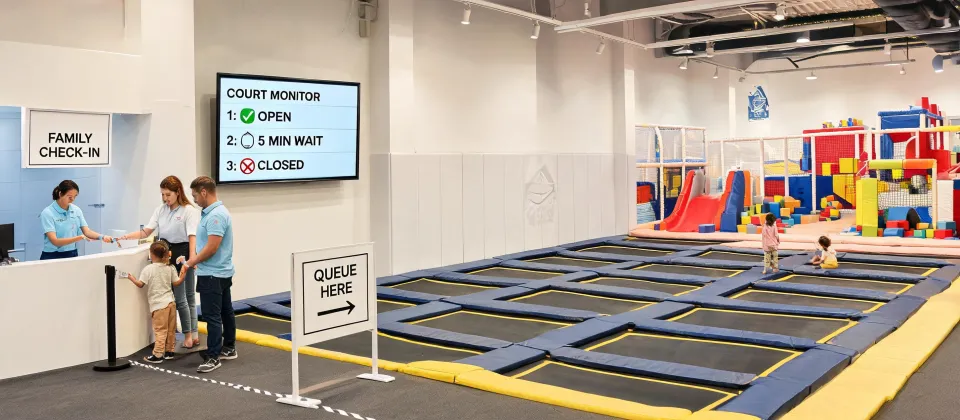
The email came in at 9:47 AM on a Tuesday. "Structural integrity concerns with the main court. Please hold all construction."
I stared at it for a solid minute. Then I did the math. The frame was already up. The foam pits were installed. Four different subcontractors were scheduled for the next two weeks. If we held everything, I'd be paying $4,200 a day in penalties and idle labor.
That was September 2022. It was the third major crisis in a buildout that should've been a routine Sky Zone franchise installation. And looking back, every single problem traced back to one bad decision I made in the planning phase.
The Setup: My First Sky Zone Franchise
In 2021, I signed on to open a Sky Zone trampoline park in a mid-sized metro area. I'd done my homework. I knew the brand had built a national presence with over 200 locations. I'd visited three existing parks, talked to a few franchisees, and liked what I heard about their operations support.
The business case looked solid. Sky Zone's model—trampoline courts, laser tag, arcade games, party packages—had proven itself across multiple markets. The demographics matched. The location (a former big-box retail space) checked all the boxes for traffic and accessibility.
But I made a classic rookie mistake during vendor selection.
I went with the cheapest buildout contractor.
Their quote came in at $380,000. The next closest was $425,000. The difference felt like a victory. I remember thinking, "This is exactly how smart franchisees operate—they find efficiencies."
I wasn't smart. I was just uninformed.
The First Problem: "Standard" vs. "Sky Zone Spec"
The contractor's bid looked thorough. They'd itemized materials, labor, timelines. They'd built trampoline parks before—two of them, for a different brand. I figured the skills transferred. How different could it be?
Very different.
Sky Zone's construction specifications aren't optional. They're developed over years of safety data and operational feedback. Things like foam density for the pits, spring tension tolerances, perimeter padding thickness—they all have specific requirements.
My contractor, used to a different brand's specs, kept trying to substitute materials that were "close enough." The foam vendor they sourced? It didn't meet Sky Zone's fire rating. The structural framing? It used a different bolt pattern that required three additional weeks of custom fabrication to fix.
Each substitution attempt became a change order. Each change order added cost and delay. By the time we got the main court frame right, we were already $8,000 over budget—and foundation work hadn't even started.
The Hidden Line Item Nobody Talks About: "Plan Re-Review"
Here's a cost I didn't anticipate: every time the contractor submitted a revised plan to Sky Zone's construction team, there was a review fee. $350 per review. We went through seven revisions on the electrical layout alone. The arcade games require specific power configurations that a general contractor—even an experienced one—might not catch on the first pass.
That's $2,450 on plan reviews that could've been zero if we'd followed Sky Zone's spec from day one.
The Big One: The Court Floor Disaster
Here's where the story gets expensive.
In October 2022, the main jump court installation was complete. It looked great. The contractor assured me everything met spec. I did a walk-through with the Sky Zone ops team on a video call. They noticed something I didn't.
"The mat tension is inconsistent across the middle row."
As it turned out, the contractor had sourced a different subfloor material—one they claimed was "functionally equivalent"—to save $6,000. The problem? The subfloor's deflection tolerances were off. Over time, this would've caused uneven wear on the mats, potentially creating safety hazards.
The fix required: removing the installed mats, replacing the subfloor, and reinstalling. Total cost: $14,200. Plus the delay—another two weeks of carrying costs on the lease.
"That $6,000 'savings' cost me $14,200 in rework, plus two weeks of lost revenue. The $500 quote turned into $800 after shipping, setup, and revision fees. The $650 all-inclusive quote would've been cheaper."
The Reckoning: When I Realized I Was the Problem
It wasn't just the contractor's fault. I'd been so focused on the upfront bid that I didn't ask the right questions.
- What's the change-order history on projects like this? (I didn't ask.)
- How many Sky Zone-specific builds has your team done? (I assumed experience with another brand was good enough.)
- What's your process for verifying materials against Sky Zone's spec? (I didn't know I needed to ask this.)
In Q1 2023, I sat down with a Sky Zone franchise consultant and did a full post-mortem. We documented every cost overrun, every delay, every rework. The total overage on my buildout: $52,000. Roughly 14% over the initial quote.
What I Learned About Vendor Selection
I now calculate Total Cost of Ownership (TCO) before comparing any vendor quotes. Here's my current checklist:
- Base quote — what the vendor proposes
- Change-order history — ask for the average overage on their previous projects
- Plan-review costs — does the brand charge per revision?
- Delay penalties — what's the risk of timeline slippage?
- Material substitution risk — how often do they submit non-conforming materials?
The vendor with the lowest base quote rarely wins on TCO. In my experience, the mid-range vendor with brand-specific experience is almost always the better choice.
Building It Right the Second Time
In 2024, I opened a second Sky Zone location—this time in a different market. I used a contractor who'd completed four Sky Zone builds previously. Their quote was $410,000.
Total overage: $0.
Opened on schedule. Started generating revenue week one. The arcade games were wired correctly on the first try. The laser tag arena didn't require a single rework.
This approach worked for us, but our situation was a second-time franchisee with capital reserves and a long timeline. If you're a first-time franchisee on a tight budget, the calculus might be different. You might not have the flexibility to reject the cheapest bid.
Lessons for Potential Sky Zone Franchisees
If you're looking at opening a Sky Zone—whether as a franchisee, a mall developer, or an investor—here's what I'd tell you:
- Respect the spec. Sky Zone's construction guidelines exist for a reason. They're not trying to nickel-and-dime you. They're trying to protect the brand and the safety record.
- Pay for experience. A contractor who's done Sky Zone builds before will save you money in the long run. Their knowledge of the spec is worth the premium.
- Build in a contingency. I now budget 15% above the quoted price for unforeseen issues. If nothing goes wrong, great—that's extra runway. But something usually goes wrong.
- Talk to other franchisees. Not the ones the corporate office recommends—the ones you find in Facebook groups or industry forums. They'll tell you the real stories.
If I could redo that first buildout, I'd invest in better vendor vetting upfront. But given what I knew then—which was nothing about the nuances of Sky Zone's construction requirements—my choice was reasonable. Ignorant, but reasonable.
The key is to learn from the mistake and not repeat it. My first Sky Zone cost me $50,000 above budget. My second one cost me nothing above quote. That's the difference between buying on price and buying on total cost.
Now I maintain our team's vendor evaluation checklist to prevent others from repeating my errors. We've caught 47 potential issues using this approach in the past 18 months across various projects. It's not perfect—nothing in construction ever is—but it's a lot better than learning the hard way.
This was accurate as of Q1 2025. Construction costs and franchise requirements change, so verify current pricing and specs with Sky Zone's team before budgeting.
Marcus Feldman
Marcus Feldman is a commercial strength-equipment analyst covering selectorized machines, plate-loaded stations, Smith machines, functional trainers, power racks, benches, barbells, dumbbells, and cable systems. He applies ISO 20957-1 and ISO 20957-2 while comparing rated loads, stability, frame deflection, pulley ratios, cable travel, adjustment increments, guarding, entrapment points, fastener retention, and fatigue cycles. His guides help gym operators, coaches, facility planners, and procurement teams evaluate biomechanics, user capacity, floor layout, maintenance access, durability, and lifecycle value.
Leave a Reply